
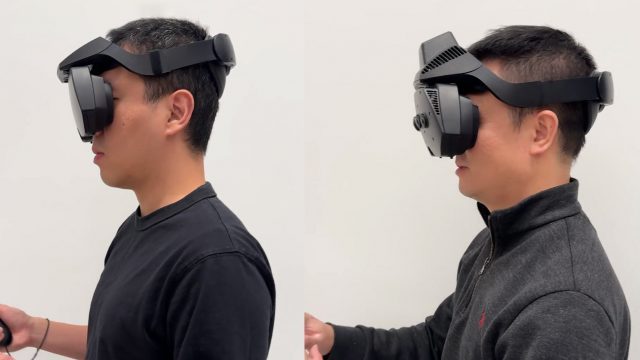
Forward of an upcoming technical convention, researchers from Meta’s Actuality Labs Analysis group revealed particulars on their work towards creating ultra-wide field-of-view VR & MR headsets that use novel optics to take care of a compact goggles-style form-factor.
Revealed prematurely of the ACM SIGGRAPH 2025 Rising Applied sciences convention, the analysis article particulars two headsets, every reaching a horizontal field-of-view of 180 levels (which is a large leap over Meta’s present headsets, like Quest 3, which is round 100 levels).
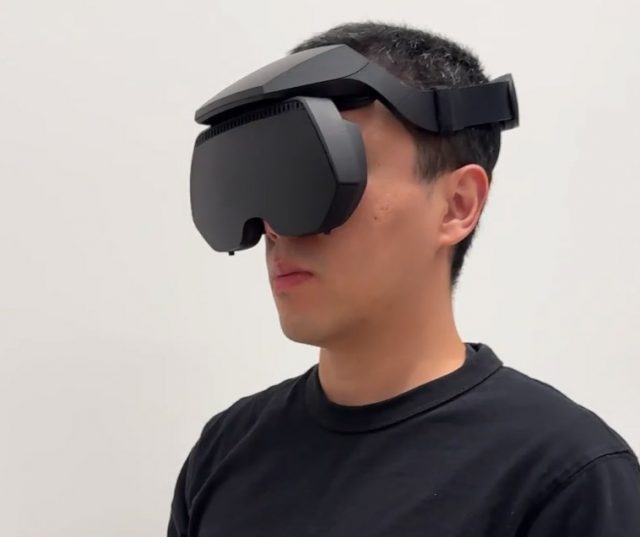
The primary headset is a pure VR headset which the researchers say makes use of “high-curvature reflective polarizers” to attain the large area of view in a compact form-factor.
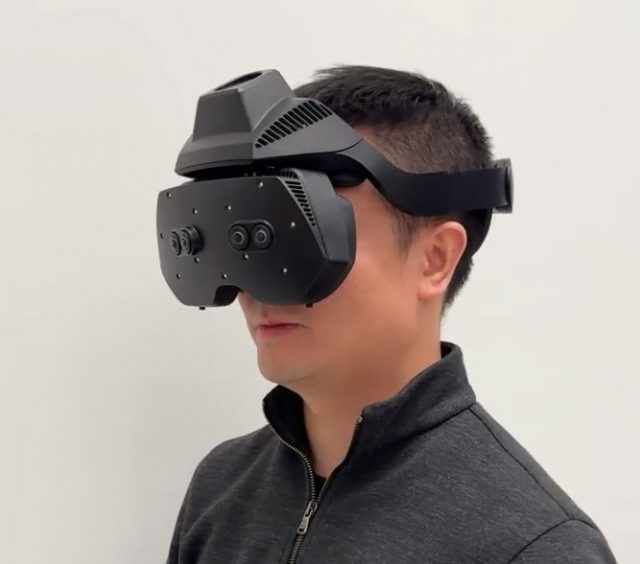
The opposite is an MR headset, which makes use of the identical underlying optics and head-mount but in addition incorporates 4 passthrough cameras to supply an ultra-wide passthrough field-of-view to match the headset’s field-of-view. The cameras complete 80MP of decision at 60 FPS.
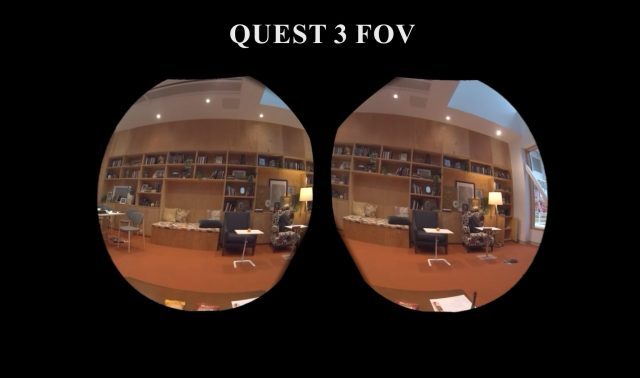
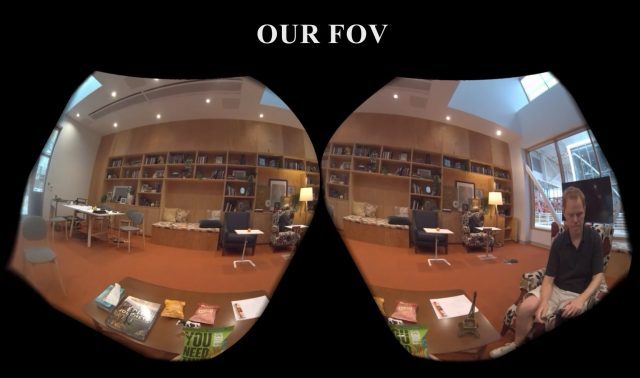
The researchers in contrast the field-of-view of their experimental headsets to that of the present Quest 3. Within the case of the MR headset, you’ll be able to clearly see the benefits of the broader field-of-view: the person can simply see somebody who’s in a chair proper subsequent to them, and likewise has peripheral consciousness of a snack of their lap.
Each experimental headsets seem to make use of one thing just like the outside-in ‘Constellation’ monitoring system that Meta used on its first client headset, the Oculus Rift CV1. We’ve seen Constellation pop up on plenty of Actuality Labs Analysis headsets over time, seemingly as a result of it’s simpler to make use of for fast iteration in comparison with inside-out monitoring techniques.
The researchers level out that equally large field-of-view headsets exist already the patron market (for example, these from Pimax), however the field-of-view usually comes at the price of vital bulk.
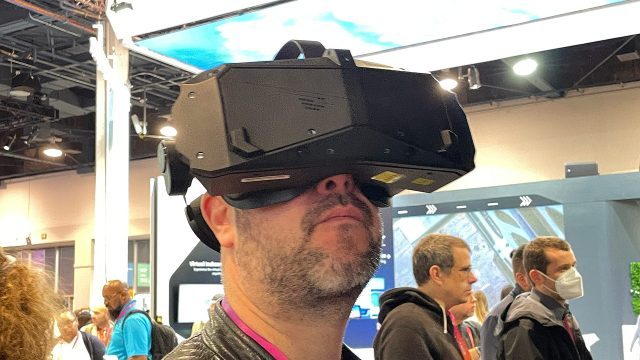
The Actuality Labs researchers declare that these experimental headsets have a “form-factor similar to present client units.”
“Collectively, our prototype headsets set up a brand new state-of-the-art in immersive digital and blended actuality experiences, pointing to the person advantages of wider FOVs for leisure and telepresence purposes,” the researchers declare.
For these hoping these experimental headsets level to a future Quest headset with an ultra-wide field-of-view… it’s price noting that Meta does heaps of R&D and has proven off many analysis prototypes over time that includes applied sciences which have but to make it to market.
As an example, again in 2018, Meta (on the time nonetheless referred to as Fb) confirmed a analysis prototype headset with varifocal shows. Practically 7 years later, the corporate nonetheless hasn’t shipped a headset with varifocal expertise.
As the corporate itself will inform you, all of it comes all the way down to tradeoffs; Meta CTO Andrew ‘Boz’ Bosworth defined as just lately as late 2024 why he thinks pursuing a wider field-of-view in client VR headsets brings too many downsides by way of value, weight, battery life, and many others. However there’s at all times the possibility that this newest analysis causes him to alter his thoughts.
The put up Meta Researchers Reveal Compact Extremely-wide Area-of-View VR & MR Headsets appeared first on Street to VR.