
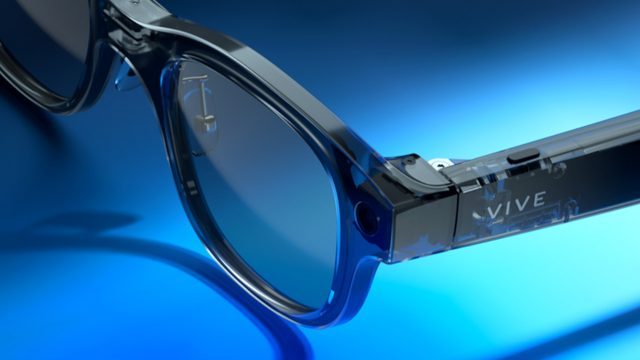

HTC is becoming a member of Meta and others within the quickly heating smartglasses area with its latest product, the VIVE Eagle. Like different smartglasses, the Eagle lacks any form of show, being positioned as an alternative as a automobile for AI voice help and media seize.
Smartglasses have been round in a single kind or one other for greater than a decade. However the rise of AI assistants primarily based on giant language fashions has induced a resurgence of curiosity within the class. At the moment’s smartglasses symbolize the form-factor that the XR trade is in the end searching for for the final word XR glasses, however they lack the highly effective immersive options of bulkier headsets. Then again, as we speak’s XR headsets have most of the immersive options and superior sensing capabilities that the trade desires for the final word XR glasses, however they lack the compact and comfy form-factor of correct glasses.
Virtually talking, smartglasses present the trade burning the candle on each ends: working from a small form-factor and determining the best way to add extra capabilities, whihle additionally working from a bigger form-factor with extra options and determining the best way to shrink the dimensions. Ultimately, it seems to be sure that smartglasses and XR headsets will converge someplace alongside the way in which as the perfect steadiness of form-factor and capabilities is discovered.
So it’s not shocking to see HTC—probably the most recognizable gamers within the XR area—leap on the smartglasses prepare with the not too long ago introduced Vive Eagle.
Not like Meta—which has to this point saved its smartglasses separate from its Quest & Horizon manufacturers—HTC is making its smartglasses a part of its Vive model, which has historically been reserved for its immersive headsets.
Weighing in at simply 49 grams, Vive Eagle has a well-recognized set of capabilities in comparison with smartglasses just like the Meta Ray-Bans: a useful AI chatbot and a digicam for capturing pictures & video; there’s even the identical little button for activating the digicam, and an LED mild to indicate observers when the digicam is in use.
The digicam is claimed to be 12MP (3,024 × 4,032) and able to taking HDR pictures. Movies are captured at 3MP (1,512 × 2,016) at 30 FPS. The glasses embody 32GB of storage which HTC says can retailer some 3,000 pictures or 50 movies as much as three minutes every.
HTC is asking the chatbot that underpins the headset “Vive AI,” which it says can deal with “on a regular basis instructions like taking a photograph, taking part in music, or launching an app fully offline.” The corporate says Vive Eagle’s intelligence might be prolonged with the likes of OpenAI’s ChatGPT or Google’s Gemini for extra complicated queries, with “anonymized requests” to take care of privateness.
HTC additionally says Vive Eagle gives “real-time translation of textual content from over 13 languages,” together with photo-based translation, in addition to “voice management for telephone apps, scheduling occasions, taking part in music, and extra.” Whereas each iOS and Android are mentioned to be supported, it’s probably that Android customers will see some additional performance due to the extra open nature of the OS.
As for battery life, HTC says Vive Eagle can play music for as much as 4.5 hours. It doesn’t sound just like the included case will double as a charger (a pleasant comfort for the Meta Ray-Bans), however a minimum of the Eagle might be juiced up rapidly in a pinch, with a claimed 0–50% cost in simply 10 minutes through the included magnetic charger.
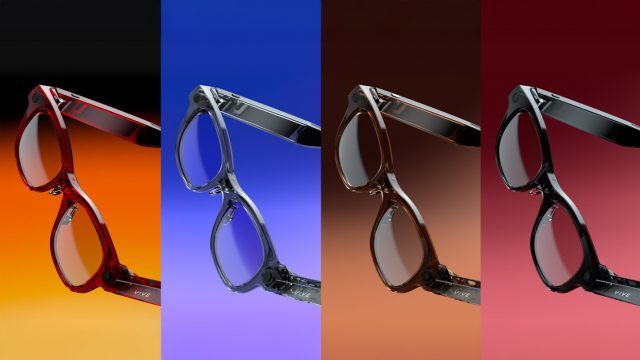
The Eagle might be outfitted with ZEISS UV400 lenses, which offer UV safety with out vital tinting (making them usable each indoors and out). Prescription lenses may even be provided for these needing imaginative and prescient correction.
Eagle might be “accessible in Taiwan first” on September 1st, says HTC. Whereas this suggests it is going to come to different international locations sooner or later, no agency launch date for different areas has been shared. The Taiwan model is priced at NT$15,600 ($520)
The submit HTC Enters the Smartglasses Race with VIVE Eagle appeared first on Street to VR.