


In video games, nothing breaks participant move like a loading display, and in digital actuality this downside is amplified tenfold. ‘Presence’ or ‘immersion’, the magical but fragile feeling of ‘being there’, is what makes VR so particular. When a participant is all of the sudden teleported out of a fantastical world and into a chilly, black expanse with a solitary loading bar, the phantasm is immediately shattered. Worse but, unaccounted mini-loads could cause body fee stutters and subsequent VR illness. On this Visitor Article, VR developer Charlie Cochrane explores a spread methods for designing round immersion-breaking loading screens.
Visitor Article by Charlie Cochrane
Charlie Cochrane is a solo VR dev working Crooks Peak studio. With a background in robotics, programming, and a cookie supply firm, he began making pastime VR video games in 2016 and went full time in 2021. His sci-fi motion horror sport ‘By Grit Alone‘ launched winter 2024, and the upcoming Victorian zombie practice sim ‘Full Steam Undead‘ is due Spring 2026, each accessible on Meta Quest and Steam.
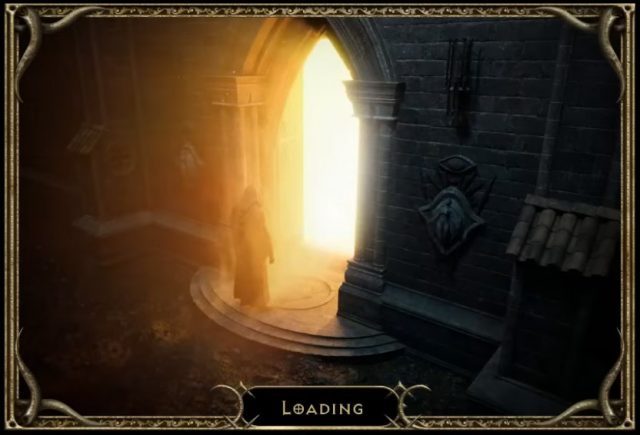
A loading bar in VR doesn’t simply pause the sport; it teleports the participant to a disorienting black void, fully breaking the sense of ‘presence’.
It’s an issue I took as a core design pillar for my earlier sport, By Grit Alone, and my upcoming title Full Steam Undead. Each function a ~4 hour marketing campaign with a tough rule: zero loading screens and no framerate stutters.
On this article, I’ll share among the high-level methods, from technical wizardry to misleading tips, that builders use to attenuate or cover loading solely. The reader ought to come away with a brand new appreciation for these invisible techniques and a greater understanding of why there are so many elevator scenes in video games.
The Background Load (Streaming)
The most effective hundreds are those gamers don’t even realise are taking place. Enter ‘Asset Streaming’; the objective right here is to load the sport’s belongings (fashions, textures, sounds) in small chunks within the background earlier than they’re wanted, relatively than in a single, game-halting block.
This may be tough, as the sport must predict what wants loading and when, in order that it’s prepared and preloaded in the meanwhile it’s required. It’s a cautious balancing act; if you happen to preload an excessive amount of then you definately’ll eat up all of the reminiscence, whereas not sufficient and chances are you’ll be caught out needing unloaded belongings. This may be further tough in VR, the place reminiscence and processing energy might be tight on standalone techniques and even the shortest blocking load could cause a noticeable stutter.
Asset streaming might be so simple as loading an MP3 audio file just a few seconds earlier than it must play. In By Grit Alone, every time you get an NPC radio message, I play somewhat radio static buzz at first of the decision. This two second clip frames the decision properly, but in addition buys me two seconds to load the precise message within the background!
A extra advanced however widespread instance; chunking up a big open world map and loading/unloading these chunks relying on the participant’s location and examine path. Asgard’s Wrath 2 is a beautiful instance of this; executed correctly the participant is ready to trip across the huge map with no loading bar in sight. Executed poorly and the participant will see elements of the world or enemies teleporting out and in of the sport.
The Hidden Load (Deception)
Asset Steaming is nice, however even then, generally the engine simply wants extra time or reminiscence. For instance: the participant is shifting from one huge space to a different, and the brand new space is simply too massive to be streamed in ‘invisibly’ with out first eradicating the previous.
Enter ‘The Elevator’. The participant steps in, presses a button, and is compelled to attend as they slowly ascend or descend, maybe whereas NPCs chat or some stuffy elevator music performs. That (typically unskippable) trip is a loading display in disguise. By inserting the participant in a small house, the engine can unload the earlier scene, unlock the reminiscence after which load within the new scene, whereas the trip offers the engine time to do that within the background.
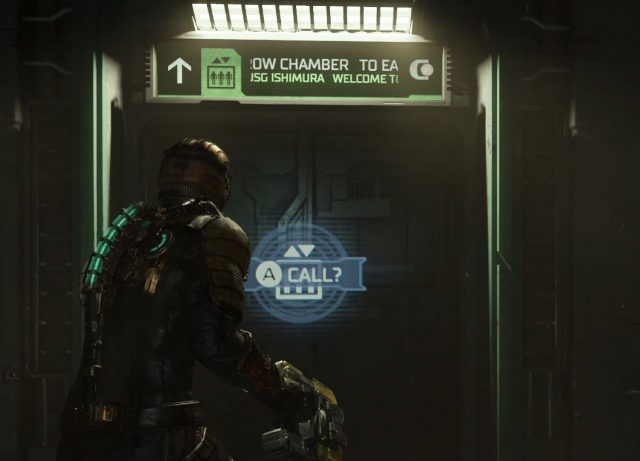
In fact the elevator is only one instance, however as soon as you already know what to search for, you’ll see these hidden hundreds all over the place:
- The Tight Squeeze: The participant has to shimmy via a slender rock crevice or between two partitions.
- The Gradual-Open Door: A personality struggles to pry open a heavy gantry door or waits for a high-tech ‘decontamination’ scan earlier than the door opens.
- The Crawlspace: Forcing the participant right into a vent or low tunnel, the place motion is gradual and the view is restricted.
These aren’t lazy designs, they’re non-intrusive options to maintain participant interactivity on this planet, whereas giving the engine the time and assets to carry out loading within the background.
The ‘Pause’ as a Load (Diegetic UIs)
Opinion alert: good VR design integrates UI into the world as a core a part of sustaining presence. To me, a pause menu that unnecessarily teleports you out of the sport is simply as unhealthy as one other loading display. Glorious VR examples of placing menu parts into the sport world embody:
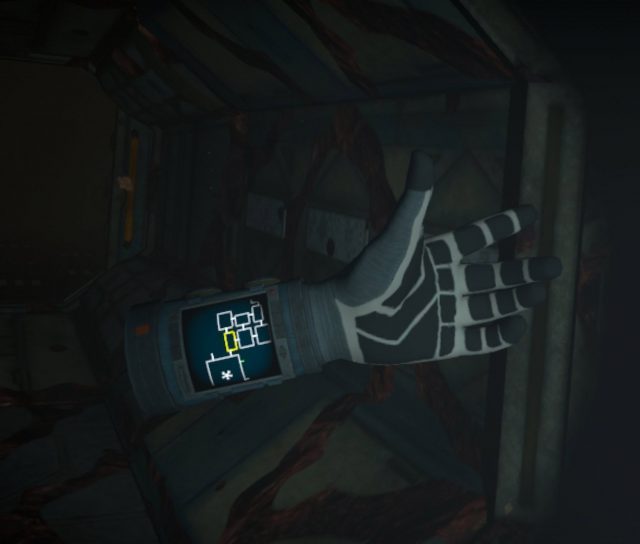
In Cosmodread, an updating map of the spooky ship is wrist mounted and at all times glanceable:
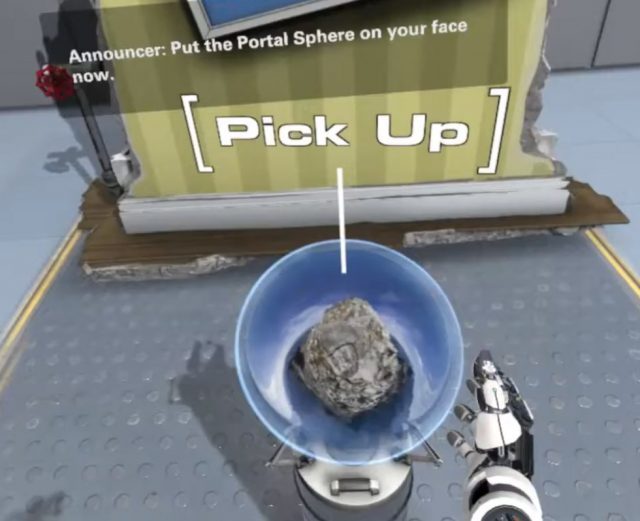
 In The Lab, you load a stage by pulling an orb onto your head relatively than utilizing a menu of listed ranges:
In Into The Radius, you handle your stock by pulling objects out of a bodily backpack relatively than a listing menu:
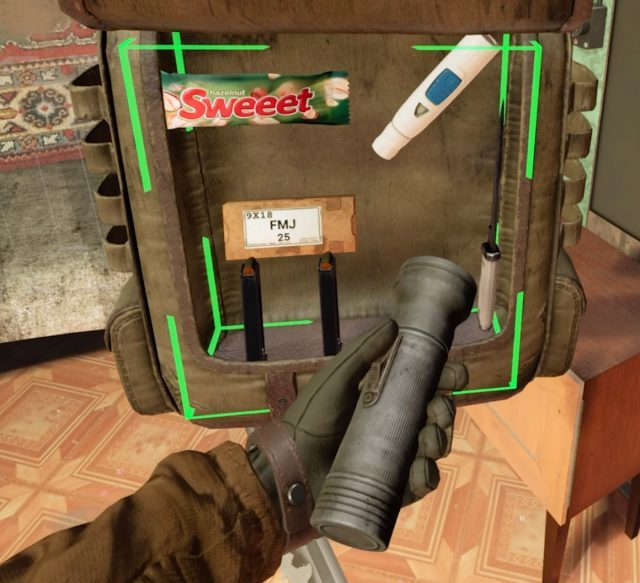
All of those keep away from the ‘pause’ and maintain the participant on this planet. Even higher, in doing these actions with out pausing, the participant could also be wanting over their shoulder when doing so, conscious that their setting won’t care if they’re stopping to examine their bag or map.
The ‘Failure’ Load (Prompt Resets)
It may be very laborious to cover failure (sorry mum), however hiding a load on failure? That we will do!
In a difficult, restart-heavy VR sport, failure might be a part of the educational loop. Consider Beat Saber or Pistol Whip; having to attend 10 seconds for a ‘Reloading Checkpoint’ between each reset would fully kill the move.

These video games use ‘Prompt Reset’. The rationale they will restart in a fraction of a second is that they by no means unload the extent. Consider it like a stage present: when an actor flubs a line in rehearsal, the crew doesn’t rebuild your entire set. The director yells “From the highest!” and the actors merely reset to their beginning positions.
The sport is doing the identical factor. It’s not reloading the extent; it’s simply hitting a large ‘rewind’ button. It teleports you again to the beginning and resets the enemies and objects to their preliminary state. The extent’s belongings by no means go away reminiscence. Whereas extra advanced than merely reloading the extent from scratch, it respects the participant’s time and retains them within the zone, turning frustration right into a easy, “Okay, once more!”
The ‘First Time’ Load (Shader Compilation)
Once I mentioned my video games have no loading screens, that was somewhat lie; as with many video games, the very first time a participant begins one among my video games, I do a ‘first time load.’
The commonest cause for that is for ‘Shader Compilation’. A shader is a small program that tells the GPU methods to render a floor—this hearth, that wet-looking rock, this glass window. The primary time the sport wants to indicate you ‘fireplace’, it might must compile that shader, inflicting a noticeable hitch or stutter within the headset, and this may occur when any new kind of floor is proven for the primary time.
As with many video games, By Grit Alone opted for a easy trade-off: make the participant wait as soon as.

If you first boot the sport, it runs a one-time shader compilation step. In trade, the participant will get to traverse your entire marketing campaign with no single stutter from a shader being compiled on the fly. It’s a basic ‘pay now or pay later’ downside, however for VR, paying for the load later throughout gameplay can imply a VR illness inducing body stutter.
When You Simply Can’t Disguise It (The “Sincere” Load)
Generally there’s no method round a loading display so clearly maintain it as speedy as you’ll be able to.
It is usually essential to maintain the participant’s head monitoring energetic through the load (i.e. in the event that they transfer their head, the loading bar will keep in place within the tracked setting relatively than be caught to the participant’s view). Having a loading bar caught to your view is the worst reminder that you’ve a headset strapped to your face.
It may also be a good time for a nicely positioned tip; including a tip about problem settings on By Grit Alone’s first time load saved loads of participant frustration.
Even higher is an interactive loading display. Is it potential to truly get pleasure from a loading display? Black and White 2‘s interactive loading display was somewhat sport unto itself:
– – — – –
In the long run, all these methods serve a single goal: give the participant the most effective expertise potential by lowering or eradicating disagreeable loading screens and pointless pauses. By combining good technical choices with intelligent, context-aware design, we will shield the participant’s move state and ship on the seamless dream of digital actuality. That is paramount in VR particularly, the place a loading display can render the participant fully blind in a black expanse or trigger sickness-inducing body fee stutters.
As {hardware} will get quicker, these methods will definitely evolve, however I’ve a sense we’ll nonetheless be ready in elevators and crouching via vents within the far way forward for VR gaming.
The publish The Seamless Dream: Killing The VR Loading Display screen appeared first on Highway to VR.