
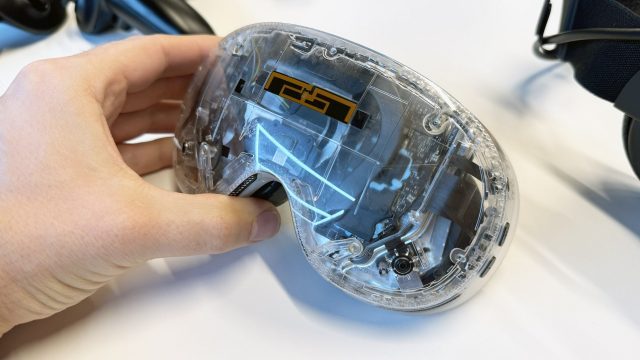
In March 2019, Valve stunned the VR business with the tease of ‘Index’, its first self-made VR headset. Index would go on to launch later in Could 2019 and be seen because the lovers’ selection in PC VR headsets for a few years to return. Unbeknownst to the world, by the point Index was launched, the corporate had already been engaged on elements of what would develop into its second VR headset, Steam Body. However Body’s improvement wouldn’t conclude for one more six years.
Throughout a go to to Valve’s headquarters, engineers who labored on each Index and Body advised me that improvement of a few of Body’s core elements started at the least way back to 2019, even earlier than Index was revealed to the world.
“We really began this in the course of [developing] Index. Yeah, so Index shipped in [early 2019]. Yeah, we had been we had been already beginning to work on the very beginnings of [Frame] just a little earlier than that.”

Particularly, the crew remembers that the headset’s pancake optics had been already in improvement earlier than Index shipped.
The optics had been all designed right here [at Valve]. We began it, like I mentioned, proper round in regards to the center of [building Index], after which after we shipped Index we centered actually exhausting on [the new optics]. […]
I believe the problem [with great optics] has all the time been about how can we do it in a means that’s reasonably priced and never heavy with glass components and all that stuff.
So it was a very exhausting, and I believe we’ve undoubtedly benefited from the business desirous to make pancake optics work as a result of there was a variety of work that wanted to enter making these manufacturable.
To actually perceive how it might take one other six years earlier than Body’s announcement, it’s essential to know how work at Valve differs from different firms. Whereas many firms create targets to launch particular merchandise on particular timelines, Valve has a way more iterative, ‘launch it when it’s finished’ mentality. Throughout my go to, a member of the Body improvement crew defined:
[An] fascinating factor about our improvement course of and timeline is we attempt to work on {hardware} [at Valve] the identical means that we work on software program.
Now we have recreation groups which have discovered how one can use play testing very well and how one can iterate very well and how one can type cross-disciplinary groups which are actually productive at simply discovering the issues which are actually enjoyable and precious.
So a variety of the processes [that led to Frame] began earlier than we even shipped Index; we didn’t have an finish objective in thoughts. We’re identical to, ‘we expect this [idea] is gonna be good. Let’s take a look at it.’ […]
And we simply form of stored going and testing it with folks, play-testing our concepts, making an attempt various things and completely different mixtures till […] sooner or later we’re like, ‘okay, that is doing every little thing we expect that it must do. This can make our clients pleased. This can be a nice companion to Steam.’ […]
And solely once we attain that time—once we’re assured that we’ve examined our targets and our assumptions—that we’re like, ‘okay, let’s get on the transport timeline.’
We actually solely wanna ship one thing when it’s prepared.
When you’ve ever heard somebody point out ‘Valve Time’, that is it in a nutshell.
In talking to the Body crew, I obtained the sense that almost all of them had been severe VR customers themselves, and the options and design of Body had been pushed closely by what they themselves—not some summary ‘addressable viewers’—needed in a headset. They needed the headset to have the ability to play their total Steam library, they needed it to be transportable and comfy, and so they needed it to be moddable.
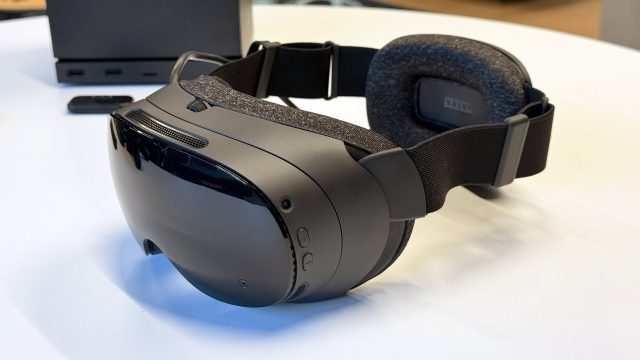
I requested if their objective with Steam Body was to make a standalone headset from the outset. A member of the crew advised me they had been extra centered on the person expertise they needed, which in the end led them to the standalone form-factor to cut back the friction of setup.
I don’t suppose we essentially mentioned, ‘let’s make a standalone machine.’ I believe it actually got here all the way down to, all of us simply needed to play the issues we needed to play wherever we needed to play.
And whether or not that’s streaming or whether or not that’s working stuff domestically, it was actually in regards to the expertise we had been after and like what made this one thing [we] needed to make use of. […]
We’re actually enthusiastic about what [the power of a full PC] offers, however we additionally need to not should arrange issues [like tracking beacons] and we wish to have the ability to pause [our games] and stroll away [to easily resume them later].
Now Body is lastly out within the open. Will or not it’s definitely worth the wait? We’ll discover out as soon as it ships in early 2026.
The publish Valve Says Steam Body Improvement Began Even Earlier than Index Was Launched appeared first on Highway to VR.