
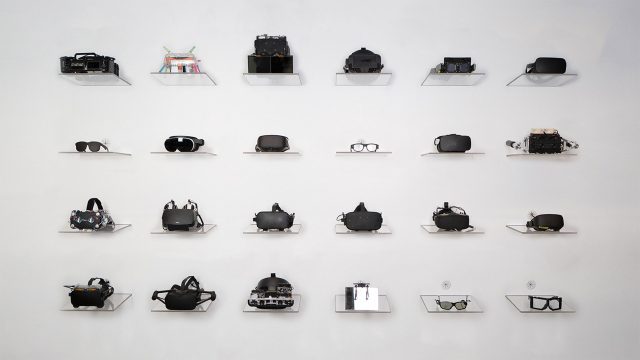

The launch of Android XR, a newly introduced headset from Valve, and main strategic shifts at Meta, are simply the beginning of what made 2025 a big yr for the XR trade at giant. 2026 will mark the fifteenth yr that we’ve been following this XR journey right here at Street to VR. With the context that comes with that long-term perspective, it’s as soon as once more time to replicate on the largest tales of the final yr and to speak about what’s on the horizon.
Meta Makes Aggressive Cuts as It Shifts XR Technique
In early 2025, Meta CTO Andrew Bosworth issued a memo calling it a ‘make or break’ yr for the corporate’s XR ambitions.
“This yr doubtless determines whether or not this whole [XR] effort will go down because the work of visionaries or a legendary misadventure,” Bosworth wrote.
Nicely, by early 2026 it’s wanting like “legendary misadventure” takes the cake.
Apparently not seeing the expansion and traction it wished, Meta is making an aggressive shift in its XR technique. The previous few days have seen studies of a number of first-party VR studios being reduce right down to measurement or outright shuttered. The corporate’s business-focused digital collaboration area, Horizon Workrooms, is being shut down, and extra. In complete, the corporate is alleged to be reducing roughly 10% of its complete Actuality Labs division because it shifts focus away from VR and “metaverse” efforts.
What it Means for 2026
It’s going to take some time for the mud to decide on this, and it most likely received’t be till Q2 that the corporate shares a transparent imaginative and prescient for what it hopes to perform with the cuts and new course.
From what I’m seeing and listening to, it appears like Meta isn’t exiting the XR area, nevertheless it’s shifting focus extra strongly towards the glasses finish of the spectrum, whereas taking away the notion that constructing a “metaverse” (a digital area the place individuals would collect, play, and work) is a strategic crucial.
Slightly, it seems to be like Meta will proceed to run its XR headset platform and let it evolve naturally moderately than making an attempt to position huge content material bets or pressure the metaverse into existence. In the meantime, the corporate is alleged to be targeted on boosting manufacturing of its good glasses to serve rising demand.
Though that doubtless means a higher give attention to good glasses and AI assistants in the meanwhile, it’s clear that the corporate’s end-goal is (and has been) to evolve its good glasses into full-blown augmented actuality glasses over time. Actually, Meta confirmed an early imaginative and prescient of this finish purpose again in 2024 with the Orion prototype. The 2025 launch of the Ray-Ban Show glasses, and the ‘neural band’, was a transparent step towards that purpose.
Ray-Ban Show remains to be only a pair of good glasses (ie: a small field-of-view and a static show with no monitoring). However already the corporate that makes the waveguide in Meta’s glasses says it has a a lot bigger 70° field-of-view waveguide that’s prepared for manufacturing.
For a few years I’ve defined that the trade has been engaged on the problem of compact and reasonably priced XR gadgets from two sides. On one hand, the trade has began by packing a wishlist of options right into a cumbersome headset, after which making an attempt to make it smaller. Then again, the trade is beginning a tiny glasses-like package deal, after which making an attempt so as to add again all of the options loved by the bulkier headsets.
Meta has principally targeted on the previous (headsets), nevertheless it’s now shifting focus to the latter (glasses). The tip purpose, nonetheless, stays the identical: an reasonably priced and cozy system that may digitally alter the world round you.
This huge shift isn’t only a huge deal for Meta, it’s a giant deal for the entire trade. Meta has been dominant within the area for years, thanks in a giant half to having the ability to out-price the competitors and appeal to builders, thus constructing the main standalone headset platform. With its standing within the trade, Meta has been capable of direct a lot of what has occurred inside the trade, both explicitly or implicitly.
If Meta is pulling again on its VR and metaverse initiatives, the door might open for an additional firm to take over its influential function. Or, the area may settle into a brand new equilibrium with a renewed aggressive panorama, which has lengthy been suffocated by Meta.
All we will say for sure is that 2026 can be a yr of main realignment because the trade figures out how hands-on Meta plans to be with its VR platform going ahead.
The Largest 12 months in Latest Historical past for XR {Hardware}
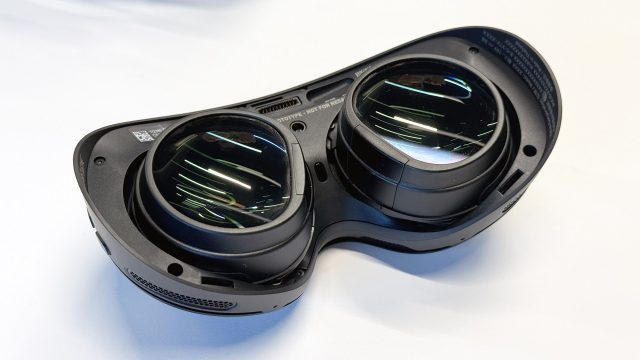
2025 turned out to be an enormous yr for XR {hardware} launches and bulletins.
Google lastly revealed and launched Android XR, a direct competitor to Apple’s VisionOS. Samsung launched the primary Android XR headset, Galaxy XR, a direct competitor to Apple’s Imaginative and prescient Professional.
Apple additionally launched a brand new model of Imaginative and prescient Professional with an upgraded processor and (lastly) an improved headstrap. And after years of rumors and hypothesis, Valve introduced Steam Body, its second-ever VR headset.
In parallel, we’re additionally seeing the speedy heating up of the good glasses and AR glasses area.
Meta launched up to date variations of its good glasses, together with Ray-Ban Show, its first good glasses with a show. XREAL previewed Aura, which is ready to launch in 2026 as the primary AR headset working Android XR. The corporate subsequently raised $100 million in new funding because it introduced an prolonged partnership with Google. VITURE, an organization with related strategy to good glasses and AR glasses, additionally raised $100 million in 2025.
What it Means for 2026
Though they occurred in the identical yr, all of those bulletins symbolize the fruits of investments and growth that occurred over the past a number of years. With three main tech titans making XR performs (Meta, Apple, and Google), 2026 is shaping as much as see a stage of competitors that really hasn’t been seen but since I began reporting on the trade again in 2011.
In the meantime, Valve is taking a complete new strategy to its VR structure. Body is a completely standalone headset—a primary for Valve—and the corporate has designed it to be a greater companion to individuals’s current Steam library, by permitting it to play just about any Steam recreation (VR or in any other case) both regionally or streamed from a close-by PC.
Whereas Valve is giving PC VR some a lot wanted love, I’m nonetheless not satisfied that Body goes to revolutionize the area. Though it has some neat extras (like improved wi-fi recreation streaming due to eye-tracked optimizations), it doesn’t actually do that rather more than a Quest 3 or Quest 3S, which can inevitably be the cheaper choices. As with its prior headset, Body will most likely stay restricted to an enthusiastic area of interest of hardcore PC VR gamers. However in the end, Body reveals that Valve by no means stopped caring about VR and that the corporate remains to be targeted on making Steam an open VR platform on PC that can be maintained for years to come back.
Meta has been onerous at work prototyping full-blown AR glasses, nevertheless it hasn’t really launched such a product but. In the meantime, Xreal and Viture have been quickly evolving their good glasses with rising AR capabilities, seemingly catching firms like Meta abruptly. The pair of $100 million investments into Xreal and Viture (and particularly Xreal’s shut partnership with Google) will put strain on Meta to launch its AR glasses sooner moderately than later.
Valve Reveals a New Headset, However Confirms No New First-party VR Sport to Go With it
Provided that Valve launched Half-Life: Alyx again in 2020 to point out what was attainable with its first VR headset, there was widespread hypothesis that the corporate would equally announce a brand new VR recreation to launch alongside Steam Body. However as the corporate informed me immediately, there isn’t a new first-party VR recreation in growth.
What it Means for 2026
The dearth of a flagship launch title to exit the door with Steam Body has left many scratching their heads. New headsets are thrilling, however given the dearth of thrilling PC VR content material in the previous couple of years, what are individuals really going to play… extra Beat Saber?
I’m glad Valve remains to be in on VR, however I’m not precisely bullish on Body. Fortunately the PC VR panorama has by no means had extra choices to serve varied hardcore PC VR niches, due to firms like Pimax, Bigscreen, and Shiftall—and hey, even Sony technically makes a PC VR headset!
A Shifting VR Participant Demographic Involves a Head as Veteran VR Studios Battle to Keep Afloat
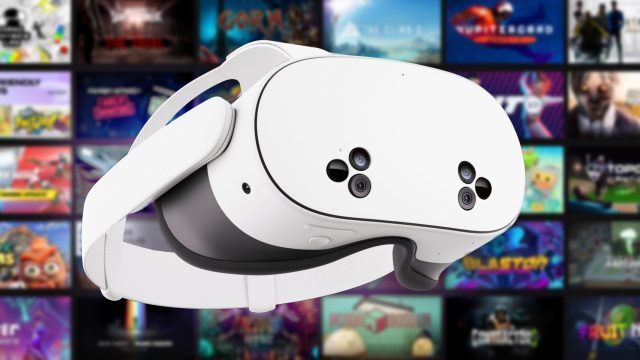
2025 was a brutal yr for established VR studios. Extremely immersive single-player apps have been as soon as the bread and butter of VR gaming. However VR was not insulated from the broader gaming trade shift towards free-to-play multiplayer video games.
That shift appears to have reached a peak simply as a wave of prior long-term bets on single-player VR content material was coming to fruition in 2025. The consequence has been report after report of established VR studios struggling to remain afloat.
Amongst studios seeing underwhelming income, workers cuts, or outright closures this yr was Cloudhead Video games, Quick Travels Video games, Soul Meeting, Vertigo Video games, Toast Interactive, nDreams, and Phaser Lock. To not point out Meta shuttering a number of of its first-party VR recreation studios that have been targeted on single-player content material.
Then again, new studios targeted on free-to-play multiplayer content material have seen speedy development and seemingly reached unprecedented new peaks of participant counts and retention. Video games like Gorilla Tag, Animal Firm, Yeeps, and UG are dominating Quest’s Prime Promoting Charts by serving a youthful demographic of gamers on the lookout for free-to-play multiplayer experiences. Curiously, all 4 of those newer top-earning titles are additionally constructed round arm-based locomotion.
What it Means for 2026
Whether or not we prefer it or not, free-to-play multiplayer is right here to remain. Lots of the hottest non-VR video games are free-to-play multiplayer video games, so it ought to be no shock that the identical method would take over VR as properly. The unlucky half is that the transition occurred so quick that by the point the newest wave of massive funds single-player VR video games landed, they have been launched right into a void of demand. With manufacturing occasions of some greater VR video games spanning 1-3 years, it’s troublesome to course-correct.
Particularly with Meta’s newest cluster of studio closures, the message is now unambiguous: premium single-player VR video games are now not what the majority of energetic VR customers are on the lookout for. That’s to not say there’s no room for nice single-player experiences in VR, however the demand for them isn’t what it was.
Of the veteran VR studios which have managed to climate the storm, I anticipate to see a lot of them take their first stab at free-to-play multiplayer VR video games, or give attention to ‘VR non-obligatory’ titles, and even go away VR in the meanwhile whereas they search higher stability within the bigger gaming market.
Frankly, I believe this case has a bit much less to do with the ‘free-to-play’ half, and extra to do with the ‘multiplayer’ half. As with virtually each leisure exercise in existence, most individuals wish to play video games with their pals. The rise of massively profitable paid multiplayer video games with constructions which might be paying homage to conventional single-player video games (ie: Future, Valheim, Helldivers, Arc Raiders) tells me that pure single-player video games as a complete will sooner or later turn into a factor of the previous.
That’s to not say that we received’t see nice, ‘single-player model’ video games nonetheless made (like, say, Crimson Useless Redemption 3) however I guess you’ll at the least have the choice to play them with a pal or two.
Imaginative and prescient Professional First Technology Pathfinding
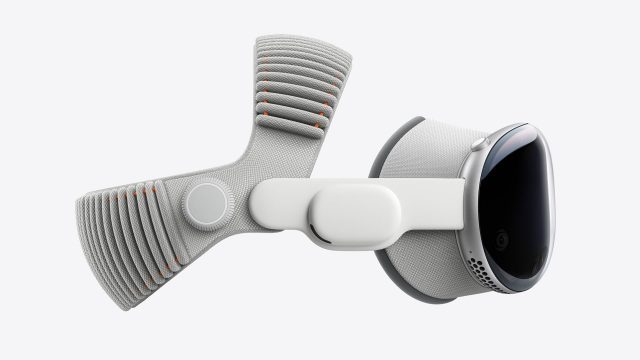
2025 was the yr that we noticed Apple working to repair first-generation product points with Imaginative and prescient Professional. That included including official help for PSVR 2 Movement Controllers and a Logitech stylus, a number of main new options included within the launch of VisionOS 26, and a refresh of the headset with a extra highly effective M5 processor and a greater headstrap.
What it Means for 2026
These adjustments have been all clearly meant to deal with first-generation ache factors. Particularly, the improved headstrap was a serious admission that the headset was too heavy and ponderous. Sadly a greater head strap can solely accomplish that a lot.
I don’t anticipate we’ll see any new XR {hardware} from Apple in 2026. However I do anticipate to see the corporate proceed to make extra of those first-generation fixes and to additional enhance the headset’s most promising use-cases on the software program facet. I’m nonetheless personally hoping for higher window administration.
Whereas there’s been a lot reporting about Imaginative and prescient Professional as a ‘failed’ product, these which might be really linked to the XR trade perceive that Imaginative and prescient Professional is a big contribution to the state-of-the-art that’s actually solely held again by its present measurement and weight. I’m sure Apple is aware of this too.
My guess is that Apple is way from executed with Imaginative and prescient Professional and VisionOS. It’s uncommon for the corporate to make a product play solely to cancel it after one era. Extra doubtless, I’m prepared to guess that Apple has set new and particular targets for the scale and weight of its subsequent Imaginative and prescient headset, and can fortunately watch for years till it will probably really meet these targets. Within the meantime, it can proceed to put money into VisionOS, which I’ve lengthy mentioned is a extra essential contribution to the trade than the headset {hardware} itself.
2025’s “WTF” Second

What appeared on its face like an April Idiot’s joke, was something however. In 2025 Nintendo introduced it’s revitalizing its Digital Boy console.
First launched in 1995, the Digital Boy was portrayed as a sort of “digital actuality” expertise, however contemplating its small field-of-view, lack of movement monitoring, and single-color (crimson) show, it was functionally only a 3D show on a stand. Nonetheless, the console has been culturally related to “digital actuality” ever since—and it’s not precisely a constructive affiliation.
Formidable because it was, Digital Boy was an notorious failure of a recreation console, owed largely to its minimal recreation catalog, single-color show, and studies of movement illness whereas enjoying. It was discontinued lower than a yr after launch.
The upcoming $100 accent will use Change or Change 2 because the brains (and show) of the system, and it’ll play unique Digital Boy video games like Mario’s Tennis, Teleroboxer, and Galactic Pinball, with a deliberate complete of 14 titles to be launched in time (that won’t sound like many, nevertheless it’s greater than 50% of the whole Digital Boy recreation catalog).
Nintendo will even promote a $25 ‘cardboard’ model of the Digital Boy accent which can enable Change to play the identical video games however with out the stand and plastic facade to carry the console.
We nonetheless don’t know if the video games are merely being emulated or if they’ve been retouched or remastered. I hope they’ll be at the least up to date to render on the native Change or Change 2 resolutions, moderately than the tiny 0.086MP (384 × 224) per-eye decision of the unique Digital Boy.
What it Means for 2026
Nintendo continues its lengthy historical past of bizarre selections, and I’m right here for it.
2026 Wildcards: Snap & HTC
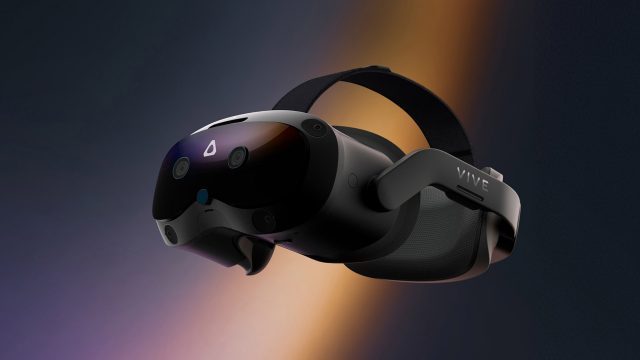
In my ebook, the largest wild playing cards for 2026 are Snap and HTC.
HTC was as soon as a outstanding participant within the VR area, having constructed an extended line of PC VR headsets that rivaled Meta’s Rift. However as soon as Meta shifted focus to standalone, HTC wasn’t capable of sustain. Certain, HTC launched a number of standalone headsets, however none have come near the patron and developer traction of Meta’s Horizon.
That’s left HTC meandering over the past a number of years, culminating final yr within the sudden sell-off of a lot of its XR engineering expertise to Google for $250 million. Since then, HTC has adopted Meta into the good glasses area with VIVE Eagle. However, up to now, the glasses have solely launched in Taiwan.
Precisely the place HTC heads subsequent is unclear. Will it comply with Meta’s lead once more and shift its main focus to good glasses? Or might it swoop in and attempt to fill the vacuum left by Meta’s pullback from the VR and metaverse area?
The latter might be a big alternative for the corporate which, at very least, has the identical core items already in place (standalone VR headsets, an app retailer, and a ‘metaverse’ platform). To not point out robust traction within the B2B and LBE areas, which Meta by no means fairly received a deal with on.
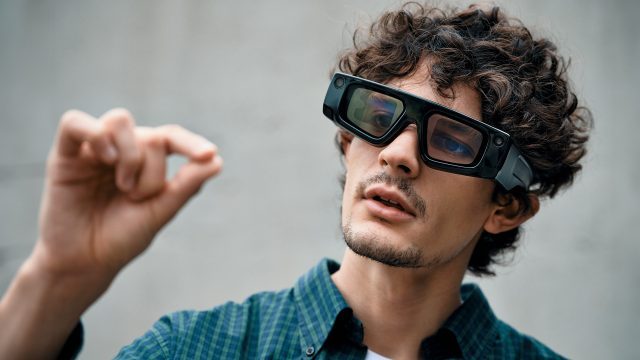
As for Snap, the corporate has been planning its entry into the patron AR area for years at this level. Final yr the corporate’s CEO successfully mentioned that its guess on the AR area is key to the corporate’s continued existence.
The corporate has launched two generations of its ‘Spectacles’ AR glasses, and the corporate has frolicked specializing in builders and constructing out tooling primarily based on suggestions.
Snap plans to launch its first pair of client AR glasses this yr, nevertheless it stays to be seen if it has any distinctive technological benefits in comparison with what’s already on the market. Even when not, it’s attainable that Snap’s social and fun-focused strategy to AR glasses might be a successful play, particularly if it will probably efficiently draw its fleet of Snapchat AR builders over to its glasses. The corporate says that’s the plan, anyway, because it has been constructing instruments that make it simpler for builders to construct Lenses that span each hand-held and head-worn AR.
– – — – –
As somebody who has been reporting on this trade for almost 15 years now, I actually imply it once I say I imagine 2025 can be appeared again upon as probably the most vital moments for the XR trade general. The following 5 years are sure to see extra change, competitors, and innovation than the final 5 years.
What have been your greatest XR tales of 2025 and what do you assume is coming in 2026? Drop a line within the feedback to tell us!
The put up XR 12 months in Evaluation: The Most Essential Tales of 2025 and What They Imply for 2026 appeared first on Street to VR.